The triangle on sweatshirts: the detail almost no one can explain
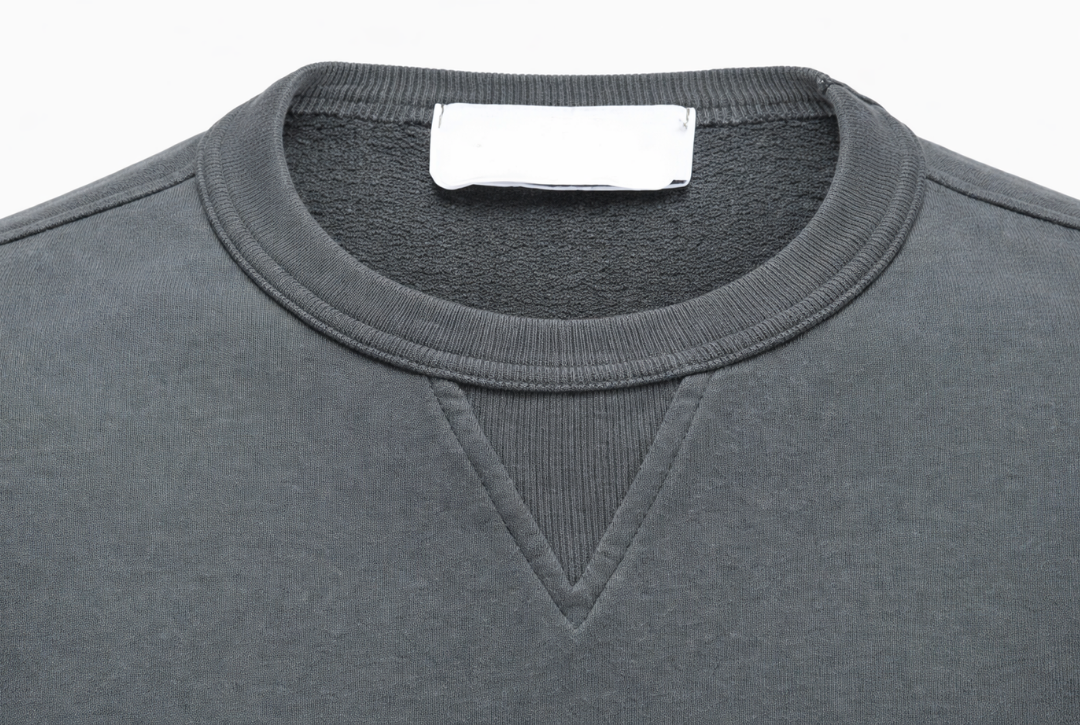
Few garments feel as everyday as the sweatshirt. It is worn almost without thinking, easily integrated into daily life and, for that very reason, often overlooked. And yet, just below the collar, many sweatshirts feature a small triangular insert that seems to resist the passage of time. It has been there for decades, instantly recognisable, but rarely questioned. Over the years, it has been reduced to a vintage-style gesture, wrapped in simplified explanations that fail to tell the full story.
Born from function, not decoration
To understand this element, it is necessary to return to the origins of the sweatshirt. In its early days, it was not designed for leisure, but for physical effort. Athletes needed garments that were durable, comfortable and capable of withstanding intense training and frequent washing. The cotton fabrics of the time were thick, lacked elasticity and were especially vulnerable around the neckline, an area subjected to constant tension when putting the garment on and taking it off. The triangle emerged as a practical solution to this structural problem.
Sweat, tension and the limits of early fabrics
This insert fulfilled several roles at once. Its structure allowed for better moisture absorption around the neck and upper chest, where sweat tended to accumulate. At the same time, it reinforced a critical point in the pattern, reducing wear and helping the garment retain its shape with use. In an era without technical fibres or elastic blends, this small addition compensated for the limitations of the material. It was not about hiding sweat for aesthetic reasons, but about improving performance and durability.
From technical necessity to visual code
As years passed, fabrics evolved and the sweatshirt moved away from the athletic world into everyday wardrobes. From a technical standpoint, the triangle was no longer essential. Still, it remained. Today, its presence responds more to heritage than to function. For some brands, it represents continuity and respect for the original language of classic sportswear. For others, it is simply a visual reference applied without much thought.
Learning to read what remains
This is where the real difference lies. A well-proportioned insert, naturally integrated into the neckline and coherent with the rest of the garment, reveals knowledge and care. A poorly executed one exposes a superficial reference. Learning to recognise these nuances is not an exercise in nostalgia, but in understanding. When we know why certain elements exist, we stop seeing them as decoration and begin to appreciate the intention behind them. The triangle on a sweatshirt reminds us that even the most casual garments were born from real needs, not from trends.