The detail that makes the difference: how to choose the right socks this winter.
Elegance is measured in details. It is not about the price of a coat or the label on a pair of shoes, but about the coherence with which every piece integrates into the whole. In men’s style, socks are that small element many ignore and few master. A simple mistake in color or length can ruin the balance of an otherwise perfect outfit. Getting it right, however, reveals knowledge, aesthetic sensitivity, and a mature understanding of style.
Winter is a season that demands attention to layers, materials, and proportions. If you wear heavy fabrics like wool or tweed and sturdy footwear such as boots or derbies, exposing your ankles completely breaks the visual and functional harmony. Style is not just about appearance; it is about coherence.
Color harmony: the art of continuity
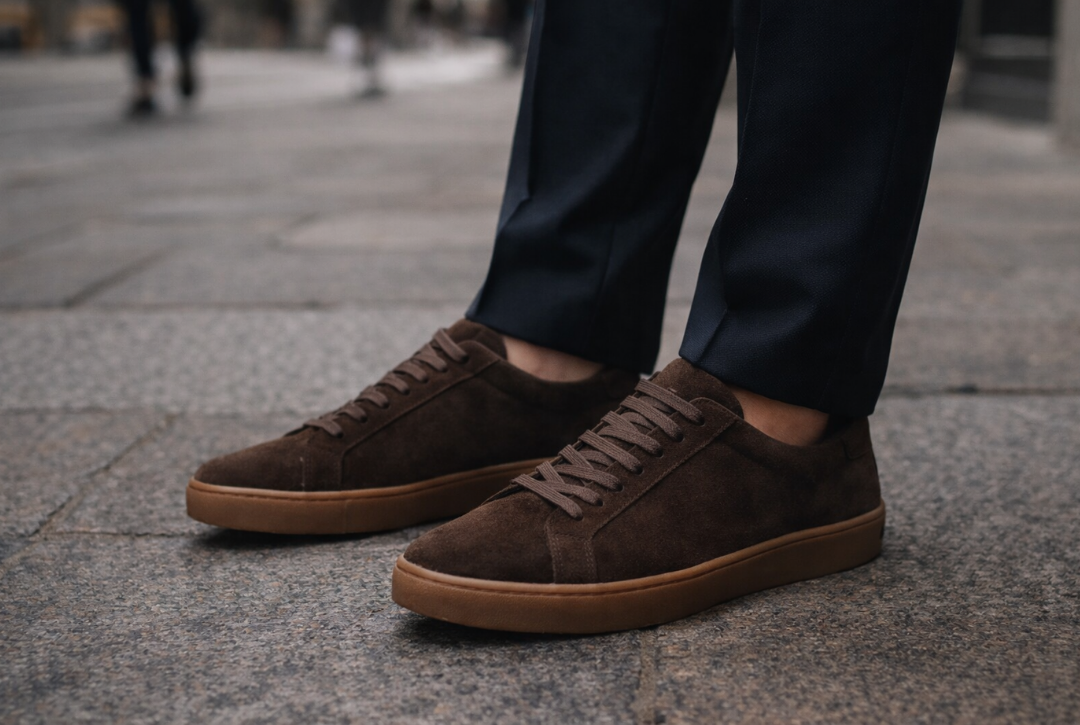
One of the most common mistakes is treating socks as an isolated piece. In reality, they should connect the trousers and shoes into a single visual line. The general rule is simple: the more formal the outfit, the more discreet the socks. If you are wearing grey trousers and brown shoes, a pair in taupe or dark brown will create a harmonious balance. Black socks, on the other hand, would interrupt the continuity and create an unnecessary contrast.
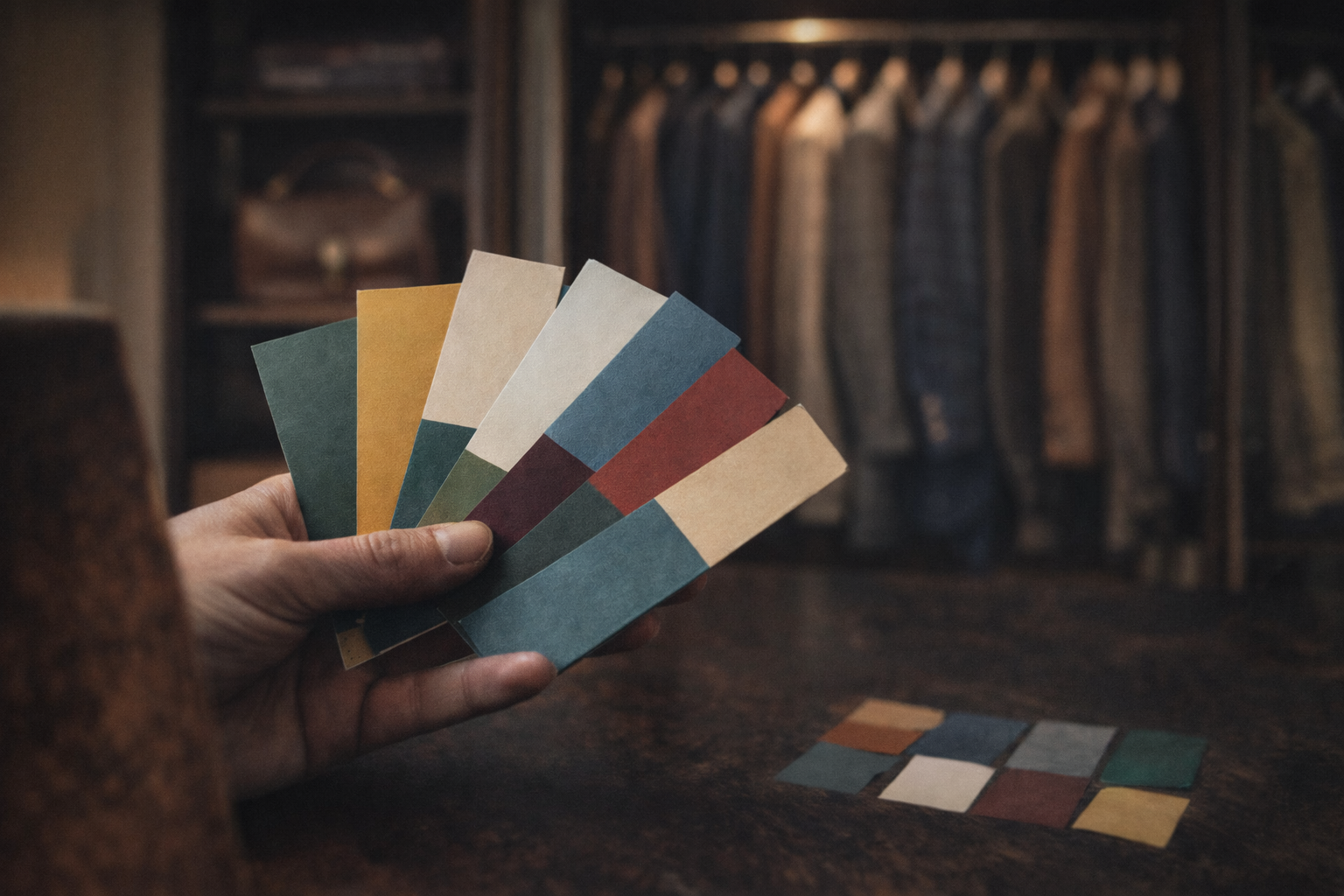
In more casual looks, there is room for freedom, but coherence remains essential. Military green sneakers call for socks in the same tone, conveying balance and intention. The same applies to brown boots and camel or tan socks: the color palette should stay within a consistent range so that the outfit feels natural. The goal is not to look calculated, but to make every shade find its place without standing out.
Those who like to experiment can play with subtle textures or patterns, as long as the tones remain aligned with the outfit. A pair of burgundy wool socks can add warmth to a navy look, while olive green can deepen an earthy palette. The key is for color to add coherence, not distraction.
Proportion matters: elegance when crossing your legs
If there is one moment that distinguishes a well-dressed man from one who is not, it is when he sits down. Few things disrupt an outfit more than a visible patch of skin between the trousers and shoes. That small detail can destroy the impression of refinement in an instant. The solution is simple: socks must be long enough to cover the ankle even when crossing your legs.
Short socks may work in summer, but they are a mistake in winter. Opting for mid-calf or over-the-calf lengths ensures a cleaner silhouette and provides comfort and warmth. If you are wearing a thick wool scarf and a heavy coat, it makes no sense to leave your ankle exposed. Elegance is often just common sense.
Picture this: a navy suit paired with oxford shoes. When sitting down, a dark blue sock that blends seamlessly with the trousers completes the look perfectly. But if a white sock or a strip of skin appears, the effect is ruined immediately. In matters of style, visual continuity is a form of respect.
Materials and thickness: comfort defines elegance
The thickness and texture of socks are just as important as their color. Not every shoe works with every fabric, and understanding this marks the difference between improvisation and intention.
For formal shoes such as oxfords or derbies, the fabric should be thin and smooth. Mercerized cotton or merino wool are excellent choices, as they provide breathability and comfort without adding bulk. A thick sock can make the shoe feel tight and distort the trouser line, breaking the elegance of the ensemble.
With sneakers, the balance shifts. Ribbed socks of medium thickness work best, adding structure and a visible texture without appearing sporty. They pair well with weekend outfits or relaxed looks, such as beige chinos and an overshirt.
For boots, insulation becomes the priority. Thick wool or cashmere socks provide warmth while preventing friction against the leather. They also add a sense of volume and visual weight that matches winter footwear. A brown boot with cream or light grey socks is a refined combination that offers subtle contrast and depth.
Style and context: bare ankles only when it makes sense
The trend of showing the ankle has dominated recent summers, and within that context, it makes sense. When the weather is warm and the fabrics are light, such as linen trousers with suede loafers or canvas espadrilles, a bare ankle conveys ease and freshness. But insisting on that look in winter is a contradiction.
Wearing thick wool layers, scarves, and boots while leaving the ankle exposed breaks the logic of the outfit and suggests a lack of judgment. True elegance lies in understanding the context and adapting accordingly. Dressing with sense is dressing with intelligence.
The Italians know this well. In summer, they wear linen suits with loafers and invisible socks, but in winter, wool or cashmere socks are non-negotiable. Not as a matter of fashion, but as a matter of respect for the season and the principles of good dressing.
Coherence as a reflection of good taste
In men’s style, every element communicates something. Socks, though discreet, reveal the level of attention, proportion, and understanding of balance. Choosing them well is not about following trends, but about cultivating aesthetic culture.
A man who cares for these details understands that elegance is not vanity, but coherence. If you seek warmth and harmony from the waist up, the same intention should apply below. A great outfit is not defined by what catches the eye, but by what remains impeccable in every movement.
This winter, remember that elegance begins from the ground up. The right socks do more than complete your look; they reaffirm a timeless truth: true style lies in the details almost no one notices, yet they change everything.