Beyond steel: noble materials in modern watchmaking
From titanium to tantalum, contemporary haute horlogerie explores new material languages that redefine elegance, performance, and the identity of each timepiece.
Titanium
In a world where weight is often synonymous with value, titanium challenges convention with an approach that prioritizes functionality and comfort. Its density is approximately 40% lower than that of steel, making titanium the preferred material for those seeking a timepiece that feels present without being intrusive. Added to this physical advantage is its outstanding resistance to corrosion and temperature changes, qualities that have positioned it as the perfect ally for the contemporary traveler.
Far from being a passing experiment, titanium has found its place among maisons of great lineage. The Octo Finissimo by Bulgari, conceived as an ultra-thin sculpture, expresses an elegance that fuses engineering with Italian design. Grand Seiko, true to its philosophy of silent perfection, has also incorporated titanium into its most refined models, such as the SBGA413, achieving a sublime balance between artisanal tradition and cutting-edge technology. Here, lightness does not diminish presence—it redefines it with silent authority.
Ceramic
To speak of ceramic in watchmaking is to delve into a universe where texture and technology merge into an almost ethereal aesthetic. Its ability to resist scratches, its hypoallergenic nature and its lightness have made it one of the most valued materials among the new generation of collectors. But beyond the technical, ceramic captivates through its soft touch, its surface that seems to absorb light, and that futuristic aura that gives each watch a distinctive presence.
Brands such as IWC, Chanel and Hublot have made ceramic one of their creative pillars. The Big Bang Unico by Hublot in black ceramic redefines the concept of power without weight, while the J12 by Chanel, in its monochromatic purity, has achieved the unthinkable: turning a ceramic watch into a new classic. Each piece made from this material is an aesthetic statement, a declaration of style that dispenses with noise and focuses on visual and sensory experience.
Platinum
Platinum needs no introduction. Its mere mention evokes exclusivity, weight and depth. Denser than any other metal used in watchmaking, platinum is reserved for exceptional creations. It is a material that is felt before it is seen, that remains with a resounding silence, removed from any form of ostentation. Its greyish-white hue does not shine with the intensity of polished steel, but its elegant restraint leaves a much more lasting impression.
Patek Philippe has crafted some of its greatest complications in platinum, such as the 5270P, a piece that demands attention while also requiring discretion. A. Lange & Söhne, with its legendary Lange 1, has also made platinum the perfect stage for German precision. A platinum watch is not chosen for fashion or whim, but from conviction. It is a decision born of knowledge and mature taste, a commitment to the eternal over the obvious.
Gold
Few materials carry the symbolic weight of gold. For centuries, it has represented value, authority and permanence. In watchmaking, its use has evolved from excess to balance. Rose gold, with its subtle warmth, has successfully captured the sensibility of modern luxury. White gold, neutral and versatile, adapts to formal contexts without losing visual strength. Even yellow gold, with its classic essence, finds new life today in pieces that pay tribute to the past with a modern sensibility.
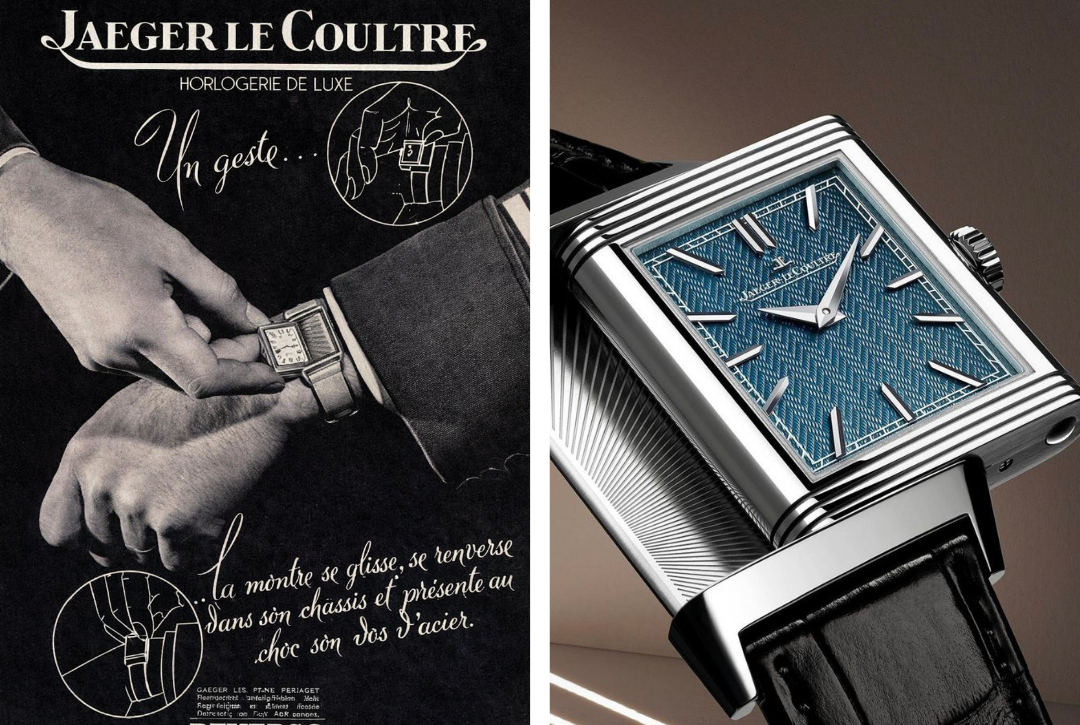
Cartier, with its Tank Louis Cartier, and Jaeger-LeCoultre, with models such as the Reverso Tribute Duoface, show that gold remains the material par excellence when it comes to timeless elegance. Each gold case, especially when crafted with brushed or hand-polished finishes, tells a story. It is not merely a decorative element—it is a way of narrating heritage with precision.
Tantalum
Little known outside of the most specialized circles, tantalum is one of the most intriguing materials in high-end watchmaking. With a unique bluish-grey tone, a density higher than platinum, and exceptional resistance to corrosion, tantalum is used by few brands due to the difficulty of working with it. Yet it is precisely this rarity that gives it its charm. Its weight feels authoritative, and its dark color makes it a sophisticated alternative to steel or titanium.
F.P. Journe has been one of the maisons to explore tantalum most successfully, giving life to limited editions that are now collector’s items. Wearing a tantalum watch is to embrace the singular, to choose an aesthetic expression that only a few will know how to recognize.
Forged carbon
Forged carbon is the embodiment of technical luxury. Created through compression processes that combine carbon fibers with high-resistance resins, this material has conquered the hearts of a new generation of collectors seeking innovation without sacrificing sophistication. Its organic appearance, with dark veins reminiscent of volcanic stone, and its extreme lightness make it a bold option for those who value uncompromising design.
Richard Mille has been a pioneer in the use of forged carbon, and thanks to its radical vision, this material now represents the purest aesthetic vanguard. Watches such as the RM 35-02 Rafael Nadal are more than mechanical pieces—they are creative manifestos where form, function and material fuse into a single intention.
Bronze
Bronze has made a strong return to high-end watchmaking as a tribute to exploration and the passage of time. Its defining characteristic is that it ages with dignity: through contact with air and skin, it develops a unique and unrepeatable patina, turning each watch into a deeply personal and non-transferable piece. Its warm tone and vibrant texture connect it to a nautical aesthetic, to the world of instruments and to the romanticism of imperfection.
Panerai, Tudor and Oris have incorporated bronze into some of their most popular creations, offering watches with soul and with a story in the making. Every oxidation tells something about the journey, the use, the lifestyle of the wearer. At a time when everything tends toward standardization, bronze is a reminder that beauty can also reside in the inexact.
A new way to read time
Material is no longer just a technical support, but an aesthetic narrative. Each metal, each unexpected combination, is a statement that transcends function to approach art. In this era where luxury seeks meaning, the choice of material becomes an act of style and thought. Beyond steel lies a fascinating landscape where time is expressed not only in hours and minutes, but in textures, weights and colors.